
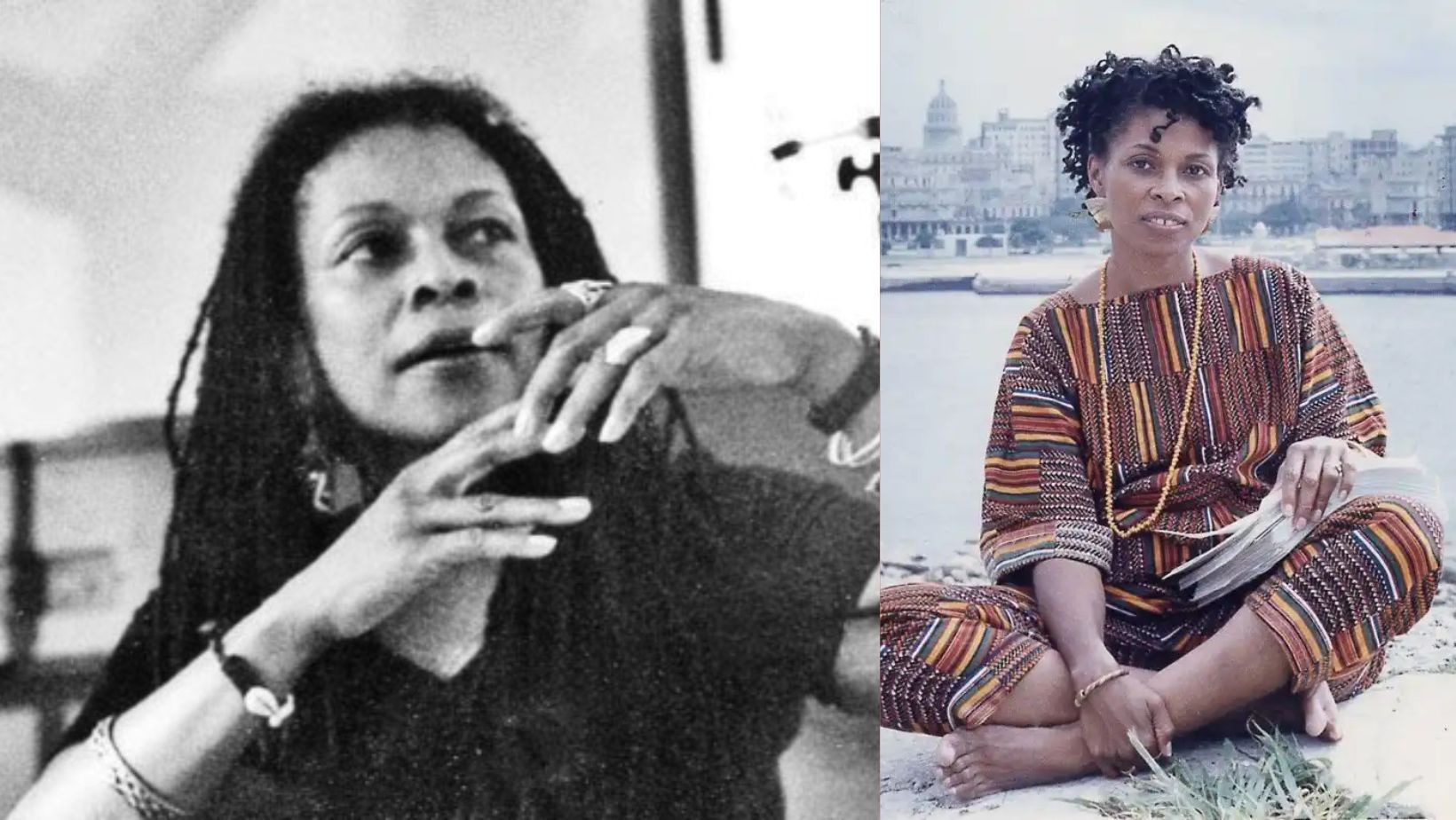

- Assata Shakur remained a deeply controversial figure for over five decades, seen as both a dangerous terrorist and a symbol of resistance against systemic injustice.
- She found a permanent refuge in Cuba, which repeatedly denied U.S. extradition requests, allowing her to live in exile until her death.
- Her case continues to spark debate about the U.S. justice system, political prisoners, and the militant struggle for Black liberation.
Assata Shakur, a former member of the Black Panther Party and Black Liberation Army, known for her conviction in the killing of a New Jersey state trooper and her decades-long fugitive life in Cuba, passed away at 78.
Cuban media announced her death on September 26, 2025, attributing it to advanced age. Shakur was the first woman on the FBI’s Most Wanted Terrorists list and remains a divisive figure seen by authorities as a cop-killer and by supporters as a revolutionary fighting against racial injustice.

Who Was Assata Shakur? A Brief Background
Born JoAnne Deborah Byron on July 16, 1947, in New York City, Assata Shakur grew up between New York and her grandparents’ home in North Carolina, where she witnessed segregation firsthand. Her parents’ divorce shaped her early years. She later attended Borough of Manhattan Community College and City College of New York, where she became involved in the 1960s civil rights movement through protests and sit-ins.
Rejecting her birth name as a “slave name,” she adopted Assata Olugbala Shakur, names meaning “she who struggles,” “love for the people,” and “the thankful one.” She briefly joined the Black Panthers, then became part of the more radical Black Liberation Army.
View this post on Instagram
Her life took a dramatic turn on May 2, 1973, in a shootout on the New Jersey Turnpike that resulted in the deaths of state trooper Werner Foerster and fellow BLA member Zayd Malik Shakur. Assata was wounded, arrested, and convicted of Foerster’s murder in 1977.
The Turnpike Incident and Court Proceedings
What started as a routine traffic stop for a broken taillight escalated into a deadly gunfight. The details remain contested, but two people died and Assata was seriously injured. During her trial, the defense argued that evidence showed she had her hands raised when shot and was too wounded to fire a gun. Despite this, and the absence of gunpowder residue on her hands, an all-white jury convicted her of murder, resulting in a life sentence.
Escape and Exile in Cuba
In 1979, after serving two years, Shakur was freed from Clinton Correctional Facility for Women in a daring prison break aided by Black Liberation Army members. She lived in hiding until 1984 when she surfaced in Cuba, where Fidel Castro granted her political asylum.
The U.S. government repeatedly sought her return, but Cuba refused, seeing the charges as politically driven. In 2013, the FBI put her on the Most Wanted Terrorists list with a $2 million reward.
Personal and Family Life Explored
Assata Shakur’s personal and political worlds were deeply connected. She married fellow activist Louis Chesimard in 1967, but the marriage ended after a few years. During her 1974 murder trial, she gave birth to her daughter, Kakuya Shakur, whose father was co-defendant Kamau Sadiki.
Her daughter joined her in Cuba in 1985. Shakur was also linked to the wider Shakur family of activists and was a close friend of Afeni Shakur, often regarded as the godmother or step-aunt of the rapper Tupac Shakur.
Also Read: What Happened To YouTuber Savannah Craven Antao? Here Is What We Know
Last Updated on September 26, 2025 by 247 News Around The World